IMPROVING ACCESSIBILITY IN AGRICULTURE: A USABILITY EVALUATION OF MULTIMODAL INTERFACES FOR LOW-LITERATE USERS IN DEVELOPING REGIONS
DOI:
https://doi.org/10.71146/kjmr892Keywords:
Low-Literacy Farmers, Accessibility, Participatory Design, ICT4D, Usability Evaluation, Digital Agriculture, Multimodal Interfaces, Urdu-Pashto, Human Computer Interaction, GDPAbstract
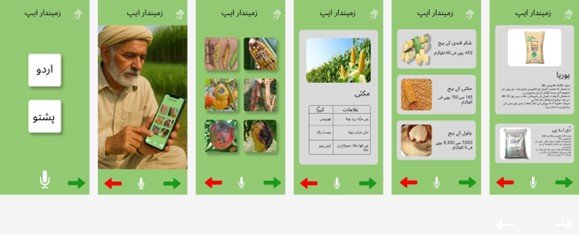
Over the period of time, digital solutions have become an integral part of all sectors, including the Agricultural sector, which is the main livelihood in many developing regions of the country. However, many farmers still face challenges in the utilization of digital technologies because of low literacy levels. Existing conventional systems are all heavily based on text based mobile solutions, which limit the ability usage among illiterate and semi-illiterate farmers. To address these challenges and to fill the gap, this study thoroughly investigates the use of a novel multimodal interaction framework that combines the usability of ICT solutions in low literacy contexts. The proposed framework's efficacy and effectiveness can be evaluated by a mobile application solution that was developed under the name of Zameendar in collaboration with more than 100 farmers from across different communities. The proposed framework assessment was based on the ISO 9241-11 standard for measuring different metrics like user satisfaction level, error rate, efficiency in task performance, and the success rate. The results for illiterate were low as compared to the semi illiterate users like the success rate for illiterate was 53% but the semi illiterate users achieved 82%, the task completion rate was also low as compared to the semi illiterate users which was 68.7 second, and there was greater level of user satisfaction as compared to the illiterate users, who nonetheless showed a 78% reduction in errors with repeated use underscoring the learnability of the approach.
The results and findings of this study demonstrated that the integration of a multimodal interaction framework with a focus on culturally grounded interactions that can improve accessibility for both users who are illiterate and semi-illiterate. The same approach can be followed across the developing regions. Therefore, the main contribution of this work is an evidence-based methodology and is scalable for designing digital solutions targeted towards usability in low-literacy regions.
Downloads
References
Ahmad, N. R. (2025). The impact of fintech startups on financial innovation and stability in Pakistan’s evolving financial landscape. Pakistan Journal of Financial Innovation and Technology, 3(2), 91–105.
[1] Chohan, Usman W. "Writings at CASS (2018-23), Volume 2: National Economy." (2024).
[2] Chandio, A.A., Amin, A., Khan, I., Rehman, A., Memon, A.: Can digitalization improve agriculture? Exploring the impact of ICT on grain food production in SAARC countries. Information development, 02666669231225945 (2024)
[3] Pejovic, V., Skarlatidou, A.: Understanding interaction design challenges in mobile extreme citizen science. International Journal of Human–Computer Interaction 36(3), 251–270 (2020)
[4] Jan, S., Maqsood, I., Ahmad, I., Ashraf, M., Khan, F.Q., Khalil, M.: A systematic feasibility analysis of user interfaces for illiterate users. Proceedings of the Pakistan Academy of Sciences 56(4), 2518–4253 (2020)
[5] Cheema, S.M., Ali, M., Pires, I.M., Gonc¸alves, N.J., Naqvi, M.H., Hassan, M.: IoT-enabled smart farming: Urdu language-based solution for low-literate farmers. Agriculture 12(8), 1277 (2022)
[6] Islam, M.N., Khan, N.I., Inan, T.T., Sarker, I.H.: Designing user interfaces for illiterate and semi-literate users: a systematic review and future research agenda. Sage Open 13(2), 21582440231172741 (2023)
[7] Raghunath, A., Metzger, A.L., Easton, H., Liu, X., Wang, F., Wang, Y., Zhao, Y., Mpogole, H., Anderson, R.: ekichabi v2: Designing and scaling a dual-platform agricultural technology in rural Tanzania. In: Proceedings of the 2024 CHI Conference on Human Factors in Computing Systems, pp. 1–16 (2024)
[8] Chaudhry, S., Muhammad, A., Shah, A.A., Batoo, F.: Human-computer user interface design for semiliterate and illiterate users. Lahore Garrison University Research Journal of Computer Science and Information Technology 5(4), 62–77 (2021)
[9] Katiyar, S.P.: Adult illiteracy: A global social problem. In: The Palgrave Handbook of Global Social Problems, pp. 1–20. Springer, (2021)
[10] Zua, B.: Literacy: Gateway to a world of exploits. International Journal of Education and Literacy Studies 9(1), 96–104 (2021)
[11] Aleksandrova, A., Khabib, M.D.: The role of information and communication technologies in a country’s GDP: A comparative analysis between developed and developing economies. Economic and political studies 10(1), 44–59 (2022)
[12] Kamal, M., Bablu, T.A.: Mobile applications empowering smallholder farmers: A review of the impact on agricultural development. International Journal of Social Analytics 8, 36–50 (2023)
[13] Atobishi, T., Mansur, H.: Bridging digital divides: Validating government ICT investments accelerating sustainable development goals. Sustainability 17(5), 2191 (2025)
[14] Saha, S.K., Qin, J.: Financial inclusion and poverty alleviation: an empirical examination. Economic Change and Restructuring 56(1), 409–440 (2023)
[15] Spring, M., Faulconbridge, J., Sarwar, A.: How information technology automates and augments processes: Insights from artificial-intelligence-based systems in professional service operations. Journal of Operations Management 68(6-7), 592–618 (2022)
[16] Devkota, R., Hambly Odame, H., Fitzsimons, J., Pudasaini, R., Raizada, M.N.: Evaluating the effectiveness of picture-based agricultural extension lessons developed using participatory testing and editing with smallholder women farmers in Nepal. Sustainability 12(22), 9699 (2020)
[17] Cheema, S.M., Ali, M., Pires, I.M., Gonc¸alves, N.J., Naqvi, M.H., Hassan, M.: IoT-enabled smart farming: Urdu language-based solution for low-literate farmers. Agriculture 12(8), 1277 (2022)
[18] Maurice, Y., Zilber, L., Coursaris, C.K., S´en´ecal, S., L´eger, P.-M.: Lessons learned from usability evaluation with a low literacy population (2025)
[19] Ou´edraogo, I.: Mobile technology and artificial intelligence for improving health literacy among underserved communities. PhD thesis, Université de Bordeaux; Université Nazi Boni (BoboDioulasso, Burkina Faso) (2024)
[20] Mollel, M., Quiroz, L., Varley, C., Firestine, A., Mcloughlin, M.-E., Kafunah, J., MCKEOWN, P.C., Brychkova, G., Murray, U., Leiva, S., et al.: Digital technologies to accelerate the impact of climate-smart agriculture by next-generation farmers in Africa. Frontiers in Sustainable Food Systems 9, 1462328 (2025)
[21] Khan, W.: Comparative analysis of quality of higher education in Khyber Pakhtunkhwa, Punjab, and Sindh: Lessons for Khyber Pakhtunkhwa. Khyber Journal of Public Policy 1(1) (2022)
[22] Ahmed, B., Shabbir, H., Naqvi, S.R., Peng, L.: Smart agriculture: Current state, opportunities and challenges. IEEE Access (2024)
[23] Park, H., Kim, H.S., Park, H.W.: A scient metric study of digital literacy, ICT literacy, information literacy, and media literacy. J. Data Inf. Sci. 6(2), 116–138 (2021)
[24] Stewart, C.R., Yap, S.-F.: Low literacy, policy and consumer vulnerability: Are we really doing enough? International Journal of Consumer Studies 44(4), 343–352 (2020)
[25] McCampbell, M., Schumann, C., Klerkx, L.: Good intentions in complex realities: Challenges for designing responsibly in digital agriculture in low-income countries. Sociologia Ruralis 62(2), 279–304 (2022)
[26] Rafique, A., Khan, H., Ghani, A.: An experimental study on the adoption of mobile phone applications in agricultural activities among young farmers. Research Mosaic 3(1), 29–41 (2023)
[27] Floerke Meier, M.H., Spatafora, M.N., Venables, A.: Regional Disparities, Growth, and Inclusiveness. International Monetary Fund (2021)
[28] Ali, Q., Khan, A., & Ashfaq, M. (2022). Influence of mobile phone and internet technology on income of rural wheat growers in Khyber Pakhtunkhwa Province. Technology in Society, 69, 102054.
[29] Haese, A., Rouhani, Q., Mabasa, N., Trollope, B., Zyl, C., Chisenga, P.: Addressing accessibility of online platforms for low-literacy users in small-scale aquaculture (2024)
[30] Bessin, R., Seebold, K.W., Saha, S., Wright, S., Strang, J.: Vegetable production guide for commercial growers, 2014-15
[31] Ugljic, Z., Mobli, A., Oliveira, M.C., Proctor, C.A., Dille, J.A., Werle, R.: Stakeholder assessment of weed management practices and perceptions of targeted spraying technologies in corn-soybean systems. Frontiers in Agronomy 7, 1601328 (2025)
[32] Arora, S., & Kaur, H. (2024). Digital Marketing Evolution and its Societal Impact on India’s Software and Allied Industries. Academy of Marketing Studies Journal, 29(5), 1–15.
[33] Kumar, U.: Farmers’ advisory services using ICTs for enhancing agricultural productivity. Training Manual (2020)
[34] Shaikh, R., Gaikwad, R., Karade, M.: Citizen response analysis and application of business analytical tools on web portals: Specific to the agriculture domain in India. Web ology (ISSN: 1735188X) 18(4) (2021)
[35] Prakash, A., Chhatre, A., Neelam, G., Kumar, S.G., Duddu, A.: Lakhpati Kisan: Transforming Agriculture-Based Livelihoods for Smallholder Farmers in India. Taylor & Francis, (2024)
[36] Jordan, K., Mitchell, J.: Messaging apps, SMS, and social media: Rapid evidence reviews (2020)
[37] Shandana, S., & Khan, A. (2021). Use of Information and Communication Technologies among Farming Community of Khyber Pakhtunkhwa. Pakistan Journal of Agricultural Research, 14(1), 5402.
[38] Rustamani, K.: An ethnographic explanation of the changing livelihood of agro-pastoral communities in Sindh, Pakistan. Pakistan Journal of Social Research 3(01), 57–65 (2021)
[39] Srivastava, A., Kapania, S., Tuli, A., Singh, P.: Actionable Ui design guidelines for smartphone applications, inclusive of low-literate users. Proceedings of the ACM on Human-Computer Interaction 5(CSCW1), 1–30 (2021)
[40] Melash, A.A., Bogale, A.A., Migbaru, A.T., Chakilu, G.G., Percze, A., Abrah´am,´ E.B.,´ Mengistu, D.K.: Indigenous agricultural knowledge: A neglected human-based resource for sustainable crop protection and production. Heliyon 9(1) (2023)
[41] Steinke, J., Ortiz-Crespo, B., Etten, J., Mu¨ller, A.: Participatory design of digital innovation in agricultural research-for-development: insights from practice. Agricultural Systems 195, 103313 (2022)
[42] Kortelainen, H.: Forms and functions of codeswitching to Hindi/Urdu in Indian English and Pakistani English (2020)
[43] Idrees, F., Batool, A., Qadir, J.: Weather forecast information dissemination design for low-literate farmers: An exploratory study. In: Proceedings of the Ninth International Conference on Information and Communication Technologies and Development, pp. 1–5 (2017)
[44] Alant, B.P., Bakare, O.O.: A case study of the relationship between smallholder farmers’ ICT literacy levels and demographic data wrt their use and adoption of ICT for weather forecasting. Heliyon 7(3) (2021)
[45] Bartling, M., Robinson, A.C., Achicanoy Estrella, H., Eitzinger, A.: The impact of user characteristics of smallholder farmers on user experiences with collaborative map applications. Plos one 17(3), 0264426 (2022)
[46] Adesiji, G.B., Adelowo, J.Y., Komolafe, S.E., Adesiji, T.T.: Farmers perceived rating and usability attributes of agricultural mobile phone apps. Smart Agricultural Technology 8, 100501 (2024)
[47] Das, P., Pradip, D.: Usability and effectiveness of new media in agricultural learning and development: a case study on the southern states of India. Journal of Social Marketing 11(4), 357–377 (2021)
Downloads
Published
Issue
Section
Categories
License
Copyright (c) 2026 Imran maqsood, Sadeeq Jan, Mareena Karim, Umm E Rubab (Author)

This work is licensed under a Creative Commons Attribution 4.0 International License.
How to Cite