DEEP LEARNING–BASED FRAMEWORK FOR AUTOMATED DETECTION AND LOCALIZATION OF MALARIA IN MICROSCOPIC BLOOD SMEAR IMAGES
DOI:
https://doi.org/10.71146/kjmr834Keywords:
Malaria Detection, Deep Learning, CNN, YOLOv8, Blood Smear Images, Medical Image AnalysisAbstract
Malaria remains a major global health challenge, particularly in developing regions where timely and accurate diagnosis is critical. Conventional microscopic examination of blood smears is labor-intensive, time-consuming, and highly dependent on expert interpretation, leading to potential diagnostic errors. Recent advances in deep learning have enabled automated malaria detection with promising accuracy; however, most existing approaches are limited to image-level classification and lack parasite localization capability.
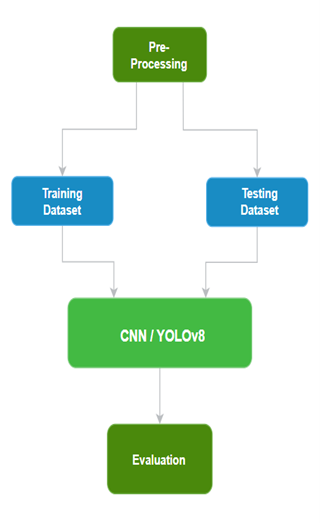
This paper proposes a robust deep learning framework that integrates Convolutional Neural Network (CNN)-based classification with YOLOv8-based object detection for accurate detection and localization of malaria-infected regions in microscopic blood smear images. The CNN model effectively distinguishes infected and healthy blood cells, achieving an accuracy of 97.19%. To overcome the limitations of classification-only models, YOLOv8 is employed to localize malaria parasites within blood cells, resulting in an improved accuracy of 98% along with precise spatial detection. Experimental results demonstrate that the proposed framework enhances diagnostic accuracy, interpretability, and clinical applicability, offering an efficient and reliable solution for automated malaria diagnosis.
Downloads
References
[1]. Malik, F., Suliman, M., Shaha, S., Khan, M. Q., & Rub, A. U. (2024). Optimizing pneumonia diagnosis during COVID-19: Utilizing random forest for accurate classification and effective public health interventions. Journal of Computing & Biomedical Informatics, 7(01), 297-312.
[2]. Zeb, P., Arbab, Q., Khan, M. Q., & Ali, H. (2023). Classification of Acute Myeloid Leukaemia using deep learning features. The Sciencetech, 4(1).
[3]. Arbab, Q., Khan, M. Q., & Ali, H. (2022). Automatic Detection and Classification of Acute Lymphoblastic Leukemia Using Convolution Neural Network. The Sciencetech (International Quarterly Research Journal), 3(4).
[4]. K. Muhammad, J. Ahmad, S. Awais and M. Sharif, “Computer-aided malaria parasite detection using deep learning models,” IEEE Access, vol. 9, pp. 122345-122357, 2021.
[5]. Das, P. Chakraborty and S. Dey, “Deep convolutional neural network-based malaria parasite detection from blood smear images,” IEEE Trans. Med. Image., vol. 40, no. 6, pp. 1670-1679, Jun. 2021.
[6]. E. Poostchi, H. Silamut, A. Maude, S. Palaniappan and G. Jaeger, “Image analysis and machine learning for detecting malaria,” IEEE Rev. Biomed. Eng., vol. 14, pp. 3-15, 2021.
[7]. R. Dong, J. Xu and X. Liu, “Malaria detection in blood smear images using hybrid deep convolutional networks,” in Proc. IEEE Int. Conf. Bioinformatics Biomed., Shanghai, China, Dec. 2021, pp. 91-97.
[8]. M. T. Islam, A. R. M. Rafi and M. Bakator, “Automated malaria diagnosis using deep learning-based object detection,” IEEE J. Biomed. Health Inform., vol. 26, no. 12, pp. 6034-6043, Dec. 2022.
[9]. S. S. Kumar, R. Venkatesan and A. K. Singh, “YOLOv3 based approach for real-time detection of malaria parasites in microscopic images,” in Proc. IEEE Int. Conf. Pattern Recognit., Montreal, QC, Canada, Aug. 2022, pp. 4578-4585.
[10]. H. Chen and Y. Zhang, “Weakly supervised malaria detection and segmentation in microscopy images,” IEEE Trans. Neural Networks Learn. Syst., vol. 34, no. 4, pp. 1502-1514, Apr. 2023.
[11]. L. Zhao, J. Liu and Q. Peng, “Enhanced malaria parasite localization using single-stage detectors,” IEEE Access, vol. 11, pp. 22580-22591, 2023.
[12]. Gupta and M. S. Ali, “Deep learning and YOLOv5 based automated malaria parasite diagnosis,” in Proc. IEEE Int. Conf. Mach. Learn. Appl., Orlando, FL, USA, Dec. 2023, pp. 237-244.
[13]. N. Patel and S. K. Singh, “Comparative analysis of Faster R-CNN and YOLO for parasite detection in blood smear images,” IEEE Trans. Comput. Imaging, vol. 10, pp. 512-523, 2024.
[14]. S. H. Li, Y. Wang and T. Liu, “Multiscale feature learning for malaria parasite detection with improved YOLO architecture,” in Proc. IEEE Conf. Comput. Vis. Pattern Recognit. Workshops, Seattle, WA, USA, Jun. 2024, pp. 138-147.
[15]. D. Roy, B. Mukhopadhyay and P. K. Bora, “Attention augmented CNN for robust malaria cell classification,” IEEE Trans. Med. Imag., vol. 43, no. 2, pp. 676-685, Feb. 2025.
[16]. V. K. Singh and P. Sharma, “Data augmentation techniques for malaria blood smear image analysis,” IEEE Access, vol. 13, pp. 30540-30552, 2025.
[17]. J. Almeida, R. Silva and F. Rodrigues, “Real-time microscopy image analysis for infectious disease diagnosis using deep learning,” IEEE Trans. Cybern., vol. 55, no. 8, pp. 7194-7205, Aug. 2025.
[18]. Kundu, Tamal Kumar, and Dinesh Kumar Anguraj. "Optimal Machine Learning Based Automated Malaria Parasite Detection and Classification Model Using Blood Smear Images." Traitement du Signal 40.1 (2023).
[19]. Nasra, P., Gupta, S., Kumar, G. R., & Aluvala, S. (2025, April). Automated Malaria Detection Using Deep Learning and the Lacuna Dataset. In 2025 3rd International Conference on Advancement in Computation & Computer Technologies (InCACCT) (pp. 156-161). IEEE.
[20]. Grignaffini, F., Simeoni, P., Alisi, A., & Frezza, F. (2024). Computer-aided diagnosis systems for automatic malaria parasite detection and classification: A systematic review. Electronics, 13(16), 3174.
[21]. Sukumarran, D., Hasikin, K., Mohd Khairuddin, A. S., Ngui, R., Wan Sulaiman, W. Y., Vythilingam, I., & Divis, P. C. S. (2023). RESEARCH ARTICLE An automated malaria cells detection from thin blood smear images using deep learning. Tropical Biomedicine, 40(2), 208-219.
[22]. Sukumarran, D., Loh, E. S., Khairuddin, A. S. M., Ngui, R., Sulaiman, W. Y. W., Vythilingam, I., ... & Hasikin, K. (2024). Automated identification of malaria-infected cells and classification of human malaria parasites using a two-stage deep learning technique. IEEE Access, 12, 135746-135763.
[23]. Mahajan, M., Kalra, A. S., Bansal, A., Bhattacherjee, A., & Jain, E. (2024, December). Automated Malaria Detection Using Deep Learning: A Convolutional Neural Network Approach for Microscopic Cell Image Analysis. In 2024 International Conference on Decision Aid Sciences and Applications (DASA) (pp. 1-6). IEEE.
[24]. National Institutes of Health, "Malaria dataset of Giemsa-stained blood cell images," Lister Hill National Center for Biomedical Communications, Bethesda, MD, USA, 2020. [Online]. Available: https://lhncbc.nlm.nih.gov/publication/pub9932.
[25]. Prathap, V. M., & Yadav, S. (2026). Enhanced YOLO-based framework and benchmarking for automated Plasmodium vivax detection. Parasitology Research.
[26]. Ang’iro, S. A., Ndubi, D., Oeba, D. A., & Gwaro, J. O. (2025). Comparative Analysis of Mask-R CNN and YOLOv8 Models for Automated Detection and Classification of Malaria Parasite in Microscopy Images. Journal of Advances in Mathematics and Computer Science, 40(11), 74-90.
[27]. Anorboev, A., Anorboeva, S., Musaev, J., Usmanov, E., Hwang, D., Seo, Y. S., & Hong, J. (2025). Selective Intensity Ensemble Classifier (SIEC): A Triple-Threshold Strategy for Microscopic Malaria Cell Image Classification. IEEE Access.
[28]. Weate, F., Li, Y., Novotny, D., Meijering, E., & Baum, J. (2025). PlasmoCount 2.0: Rapid Multi-Species Malaria Parasite Detection Using Deep Learning. medRxiv, 2025-05.
[29]. Parveen, R., Qui, B., Song, W., Al-Kahtani, N., Jamjoom, M. M., Mostafa, S. M., ... & Fatima, J. (2025). Trustworthy deep learning for malaria diagnosis using explainable artificial intelligence. Scientific Reports.
[30]. Ali, A., Pal, R., Dey, I., Cuevas, E., Perez-Cisneros, M., & Sarkar, R. (2025). DANet a lightweight dilated attention network for malaria parasite detection. Scientific Reports, 15(1), 36689.
Downloads
Published
License
Copyright (c) 2026 Hooria Khan, Muhammad Qasim Khan, Hamail Raza Zaidi, Tauseef Noor, Abdul Aziz (Author)

This work is licensed under a Creative Commons Attribution 4.0 International License.
How to Cite